

42t-33m门座式起重机整体与象鼻梁结构参数化设计
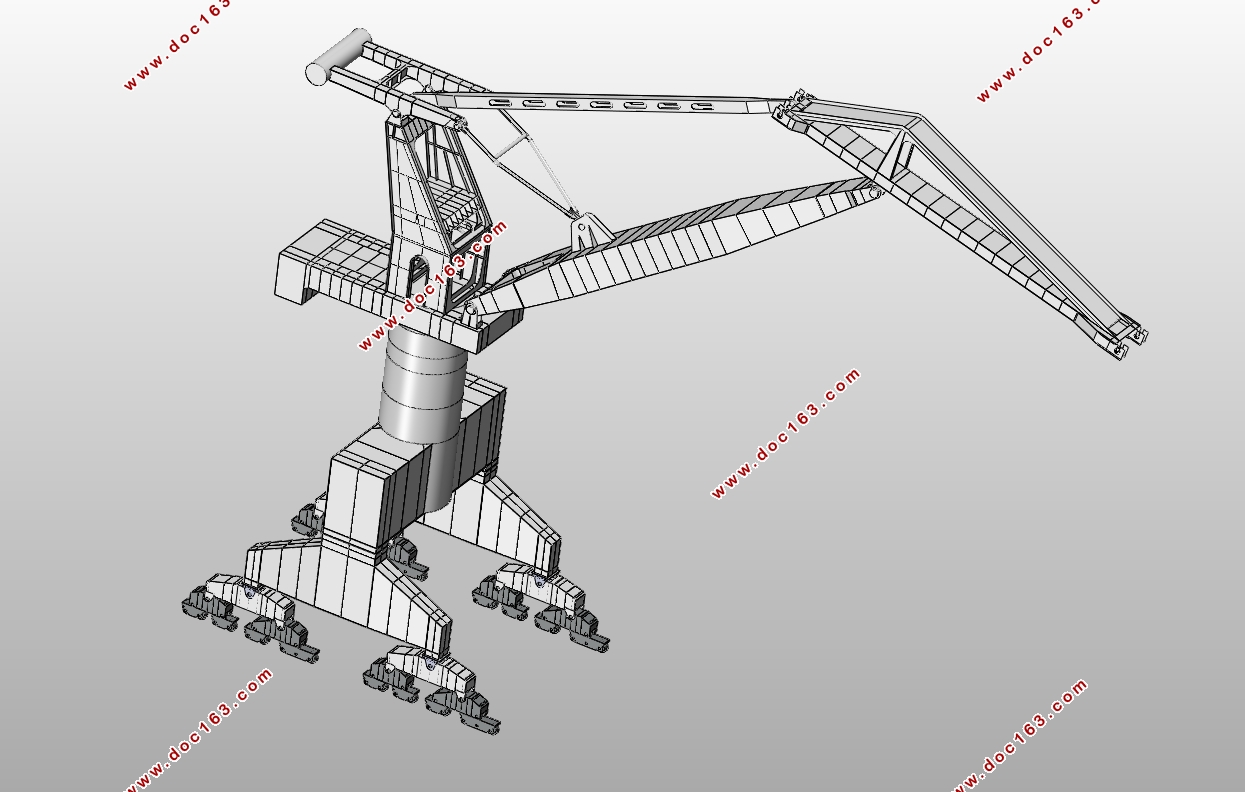
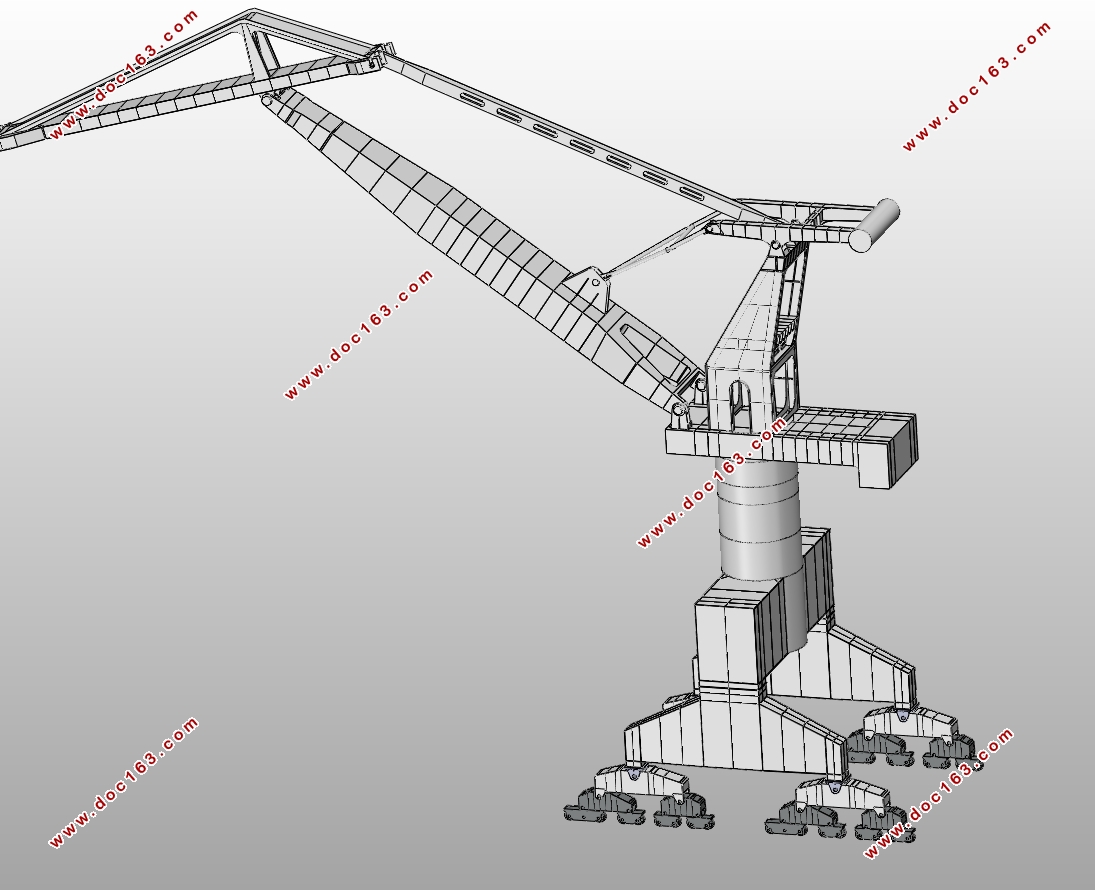
42t-33m门座式起重机整体与象鼻梁结构参数化设计(含CAD总图,SolidWorks三维图)(任务书,开题报告,文献摘要,外文翻译,论文说明书14200字,CAD总图1张,SolidWorks三维图)
摘要
随着现代化工业的飞速发展、生产规模的不断扩大,市场对起重运输机械的要求也越来越高,这就对起重机的设计提出了更高的要求。门座式起重机作为起重机的一个工种,具有工作性能良好、通用性较强、作业高速灵活、自身性能安全可靠等优点,是当前时期国内一些主要港口中,数量最多、使用频率最高的电动装卸机械设备[3]。对于起重机而言,现有的传统的设计方法不论是在设计水平还是设计效率等方面,都难以满足高速发展的现代化工业的生产需求[1]。起重机设计需要采用更加先进快速的设计方法和手段,以便达到最大程度的缩短设计周期、简化设计过程并使其变化更加灵活、提高整机的性能,从而推动这个起重机设计行业和现代化工业的发展。
因此,本课题“42t-33m门座式起重机整体与象鼻梁结构参数化设计”,以门座起重机作为研究对象,重点在于门座起重机象鼻梁结构的设计。以三维设计软件Solidworks为建模工具建立三维模型,以Visual Basic 6.0 作为开发语言,通过相关接口程序和编程语句实现对所建模型的参数化控制,从而达到快速设计、缩短设计周期、优化起重机结构的目的。具体内容如下:
阐述国内外门座起重机的发展现状以及参数化设计技术在起重机上的运用状况,并且说明该课题的研究意义;
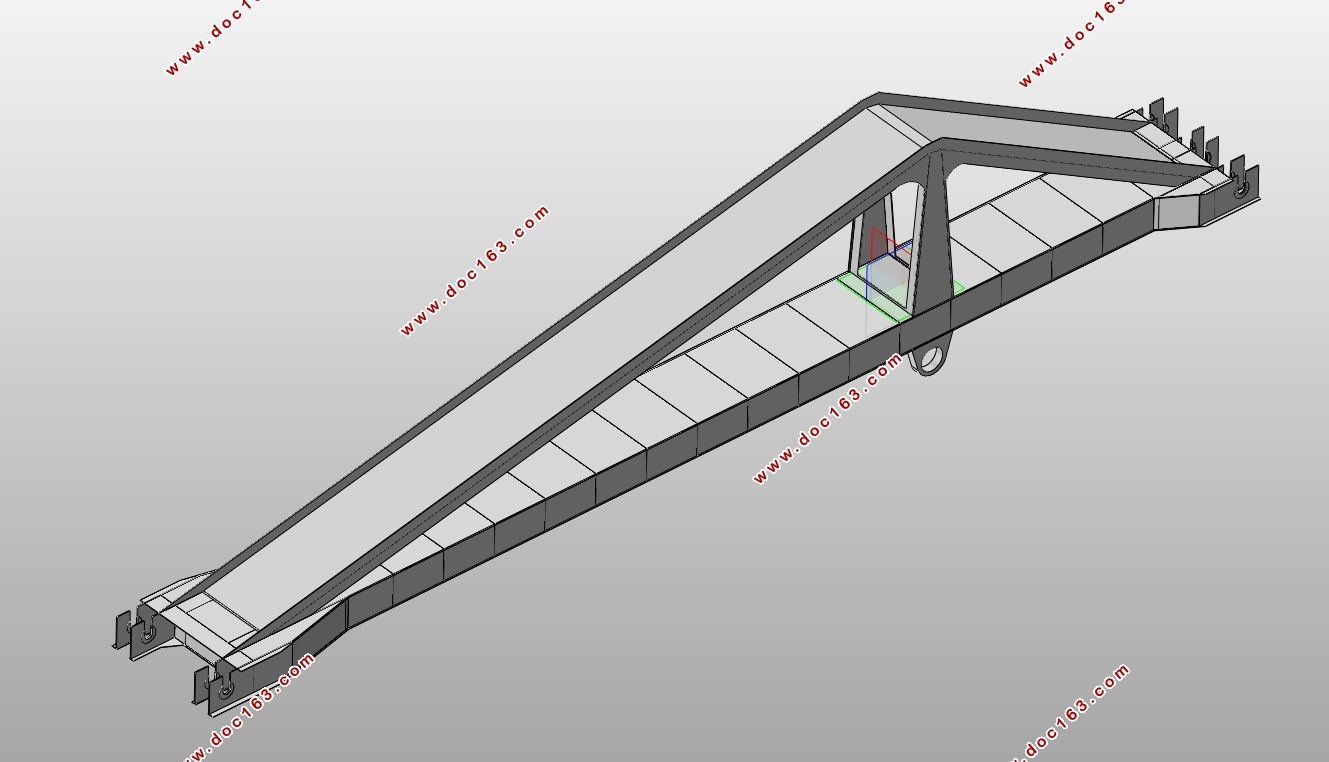
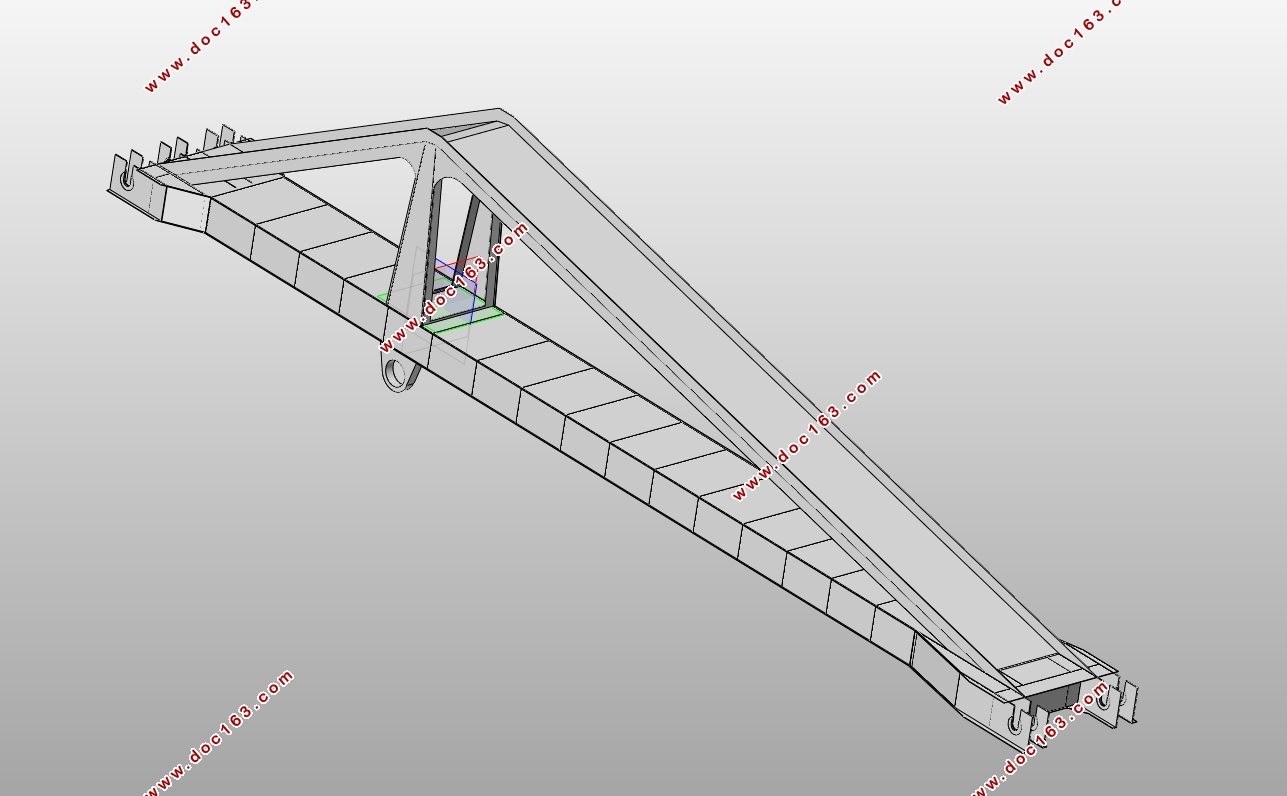
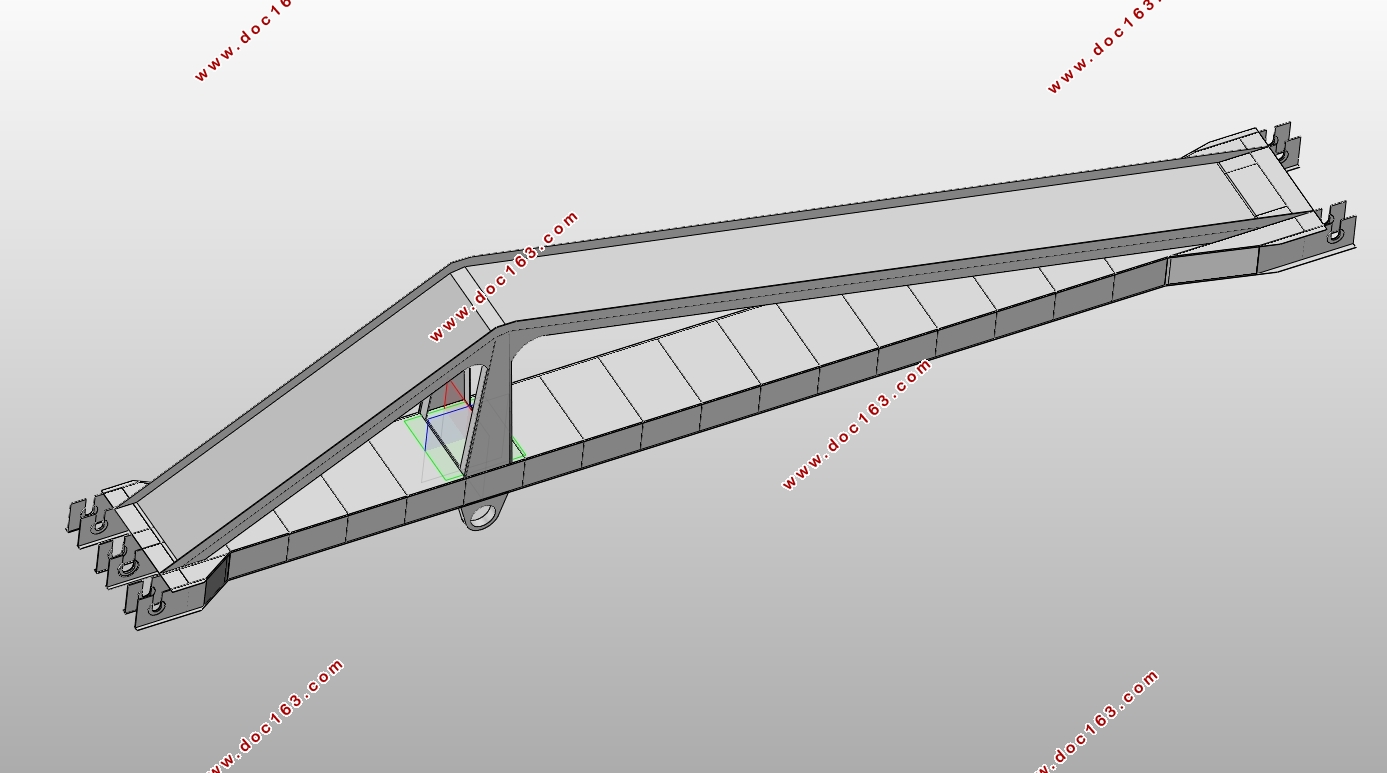
以42t-33m门座起重机金属结构作为研究对象(本人主要负责象鼻梁部分),基于三维建模软件Solidworks,设计、简化并构建象鼻梁的三维模型。
基于Visual Basic 6.0,通过编程语句实现VB与Solidworks的连接,实现用程序控制象鼻梁相关尺寸的改变,达到参数化的目的。从而实现了门座起重机整机金属结构尺寸的参数化,力求避免繁琐重复的设计与计算,缩短设计周期。
从同组组员处,通过变尺寸的方法获得能与自己所建机构进行装配的其他工作结构的三维模型,通过施加相关配合,完成整机装配。再用ANSYS的workbench协同仿真环境对所装配的整机三维模型进行有限元分析,判断整机结构是否合理
关键词:参数化设计,门座式起重机金属结构,象鼻梁结构,三维建模,有限元分析
Abstraction
With the rapid development of modern industry and the continuous expansion of production scale, the market demand for lifting and transporting machinery is getting higher and higher, which puts higher requirements on the design of cranes. As a kind of crane, the portal crane has the advantages of good working performance, strong versatility, high speed and flexible operation, and safe and reliable performance. It is the electric handling equipment with the largest number and the highest frequency of use among some major ports in China. For cranes, the existing traditional design methods are difficult to meet the production needs of high-speed modern industrial development, both in terms of design level and design efficiency.The crane design needs to adopt more advanced and rapid design methods and means, which has promoted the development of the crane design industry and the modern industry by minimizing the design cycle, simplifying the design process and making the changes more flexible and improving the performance of the whole machine. [资料来源:www.doc163.com]
Therefore, the subject "parametric design of 42t-33m portal crane and elephant trunk bridge structure", with the portal crane as the research object, the focus is on the design of the portal crane nose bridge structure. The 3D design software Solidworks is used as the modeling tool to build the 3D model. With Visual Basic 6.0 as the development language, the parameterized control of the built model is realized through relevant interfaces and programmatic statements, which has achieved rapid design, shortened design cycle and optimized crane structure. the goal of. The details are as follows:
(1) Explain the development status of the domestic and foreign gantry cranes and the application status of the parametric design technology on the crane, and explain the research significance of the subject;
(2) Taking the metal structure of 42t-33m portal crane as the research object (I am mainly responsible for the trunk and nose beam part), based on the 3D modeling software Solidworks, design and construct the 3D model of the trunk bridge. [来源:http://www.doc163.com]
(3) Based on Visual Basic 6.0, realize the connection between VB and Solidworks through programming statements, realize the variable size of the trunk and nose, and achieve the purpose of parameterization. Thereby, the parameterization of the metal structure design of the portal crane is realized, the complicated design and calculation are avoided, and the design cycle is shortened.
(4) The finite element analysis of the established three-dimensional model of the trunk bridge by the simulation of Solidworks's own module makes the model structure meet the requirements reasonably and completes the assembly of the portal crane.
Key words:parametric design, portal crane’s metal structure, elephant trunk bridge, three-dimensional modeling, Finite element analysis.
性能参数确定
本次设计课题为“42t-33m门座式起重机整体与象鼻梁结构参数化设计”,由此可知所设计的门座起重机的起重量和最大幅度分别为42t和33m。由设计任务书可知,起重机的起升高度范围是:轨上30m、轨下14m;变幅范围是10m-33m;工作级别:起升M7、变幅M7、回转M7、运行M4;工作速度:起升35m/min、变幅:50m/min、回转1.25r/min、行走:26m/min;风压:qⅠ=20m/s、qⅡ=35m/s、qⅢ=50m/s;轮压:<500KN;轨距’基距:10.5m’10.5m;起重机的门腿净空高度:≥6.5m;局部回转半径:≤8.2m。
 [资料来源:http://doc163.com]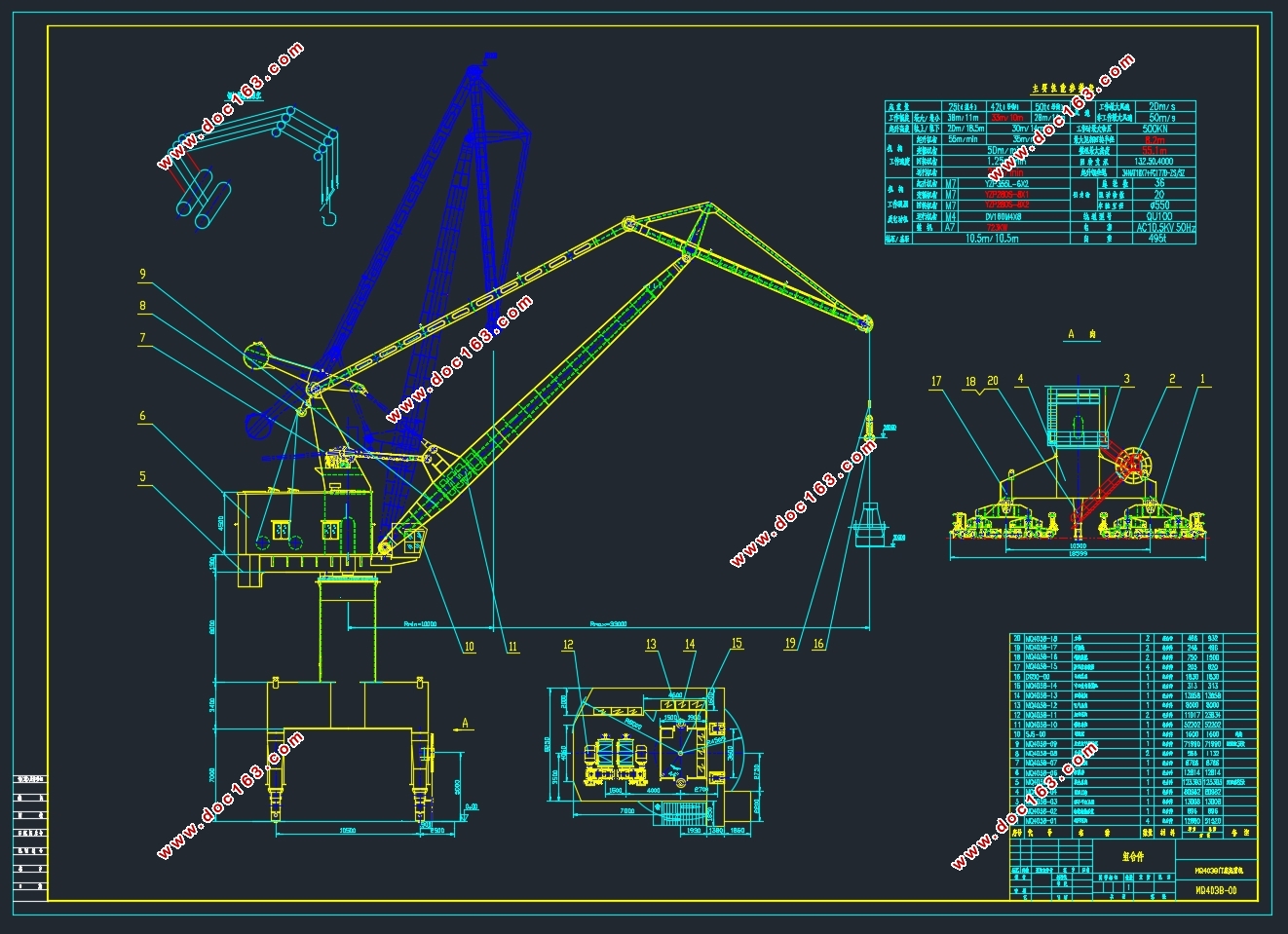
摘要 I
Abstraction II
第一章绪论 1
1.1门座起重机发展现状及发展趋势 1
1.1.1门座式起重机的发展现状 1
1.1.1.1国内发展现状 1
1.2起重机三维设计及参数化发展 3 [资料来源:http://doc163.com]
1.4与课题相关的国内外研究现状 3
1.3 课题研究目的、思路及意义 4
1.3.1研究目的 4
1.3.2研究思路 4
1.3.3研究意义 5
第二章门座起重机总体设计 6
2.1性能参数确定 6
2.2臂架结构尺寸确定 6
2.3臂架全幅度范围变化内的水平落差校核 8
2.4全幅度水平速度校核 9
2.5吊重不平衡力矩校核 10
2.6杠杆活对重臂架自重平衡系统 11
2.7数据汇总 13
第三章 象鼻梁的结构及参数特点 14
3.1确定门座起重机主要工作机构和金属结构 14
3.2象鼻梁结构简介 14
第四章 参数化建模与程序开发 15
4.1参数化结构模型建立 15
4.1.1明确主要设计参数 15
4.1.2结构参数化模型建立 15
4.2结构参数化程序开发 16
[资料来源:www.doc163.com]
4.2.2参数化开发 16
4.2.3Visual Basic编程语句 19
4.2.3参数化结果分析 22
第五章有限元分析 27
5.1有限元理论 27
5.2模型装配 27
5.3有限元分析 32
5.3.1有限元分析过程 32
5.3.2材料特性 33
5.3.3有限元分析结果 33
第六章 环保经济性分析 34
6.1经济性分析 34
6.2环保性分析 34
第七章总结与展望 35
7.1工作总结 35
7.2难点及不足 35
7.3课题展望 35
参考文献 37
致谢 38
下一篇:没有了